Do You Need an Inspection on New Construction in Ohio?
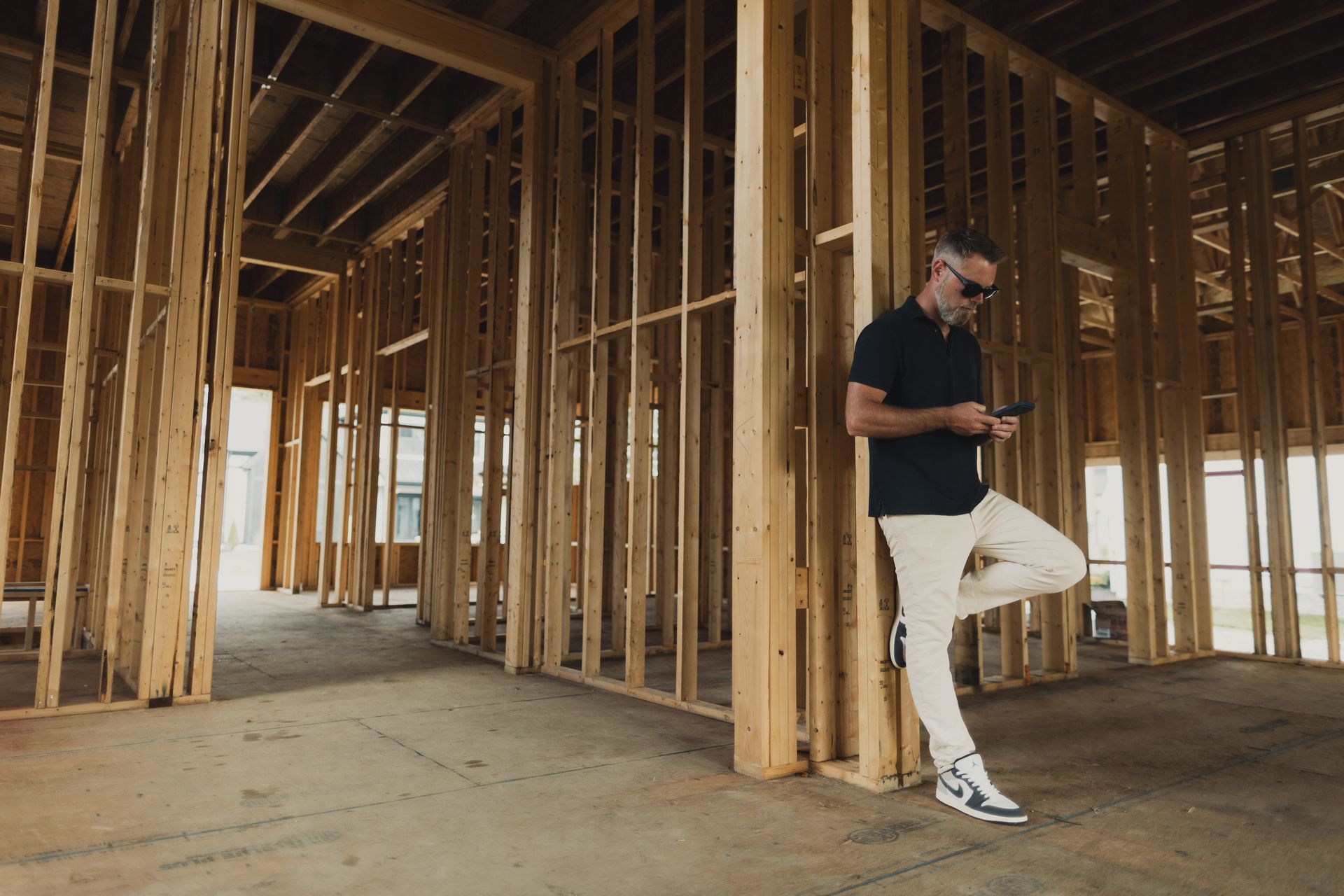
Here is the question I get more than almost any other from buyers walking a model home: it's brand new, so do I really need an inspection on new construction here in Columbus? The short answer is yes. The longer answer is the reason I grew up thinking about houses the way I do, and it might save you a five-figure repair three years from now.
I come from three generations of construction. I read a new build the way my family taught me to read any build, and I can tell you that "new" and "flawless" are not the same word. A brand-new home has one thing an older home doesn't: nobody has ever lived in it long enough to find the problems. Once you close, that job becomes yours. So let's talk about how to hand it back to the builder instead.
Do You Need a Home Inspection on New Construction in Columbus?
Yes. It is not required by law, and the builder will not suggest it, but you should get one anyway. Actually, on a new build you should think about three of them, and I'll walk through each one below.
Here is the logic. A house goes up fast, built by a lot of different crews who may never meet each other. The framers finish and leave. The plumbers come and go. The electricians, the HVAC crew, the drywall crew, each one does their piece and moves to the next job. Things get missed. Not because anyone is cutting corners, but because that is how volume homebuilding works. Your inspection is the one set of eyes looking at the whole thing on your behalf, before it disappears behind finished walls.
The builder's own crew does a quality check, sure. But that crew works for the builder. Your inspector works for you. Those are two different jobs, and the second one is the one protecting your money.
Does New Construction Mean the House Is Problem-Free?
I want to kill this myth before we go further, because it costs Columbus buyers real money every year.
The most expensive problems in a new home are the ones you cannot see on move-in day. Framing that isn't quite square. Flashing installed in a hurry before a rain. Grading that slopes toward the foundation instead of away from it, which sends water at your basement the first heavy storm. A plumbing connection that never got fully tightened. None of that shows up when you walk the model with the sales rep and the fresh paint. All of it can become your problem in year two or three, long after the excitement wears off.
The good news is that most of it is cheap and easy to fix while the house is still being built. The bad news is that it gets expensive and disruptive once the drywall is up and the sod is down. That timing is the entire reason inspections on new construction matter more than people think.
What Are the Three Inspections on a New Build?
On a resale, you get one inspection and you're done. New construction is different, because you can get eyes on the house at stages a finished home never lets you see. Here are the three, and what each one catches.
1. The pre-drywall inspection. This is the one you do not want to skip. It happens after framing, plumbing, electrical, and HVAC are roughed in, but before the drywall goes up and covers everything forever. This is your one chance to see the bones of the house. An inspector is looking at the framing, the way the plumbing and ductwork are run, whether the exterior sheathing and window flashing are done right, because that flashing is your water defense for the next thirty years and it's about to disappear behind the siding. Catching a problem here is a conversation. Catching it after drywall is a demolition.
2. The final walk-through inspection. This happens once construction is complete, before you close. It covers the whole house, roof to foundation, checking that every system actually works and everything is finished the way it should be. This is where your punch list comes from, and you should treat that punch list like a legal document, because it is.
3. The 11-month warranty inspection. This is the one almost nobody does, and it's free money left on the table. Most builder warranties run one year on workmanship (more on that below). So around month eleven, before that first year of coverage expires, you bring an inspector back through. The house has now been lived in through a full cycle of Ohio weather: a summer, a winter, the freeze and thaw. It has told you what got rushed. Nail pops, doors that won't latch after everything settled, grout cracks, a low spot in the yard that pools after a storm. You catch all of it and hand it to the builder while it's still their bill, not yours.
Each of the three catches things the other two can't. If you keep notes between them, your warranty inspection isn't starting from zero.
What Does a New Construction Inspection Cost in Columbus?
Real numbers, because this is where people talk themselves out of it.
Here in Columbus, plan on about $500 total for a new build. Figure around $250 for the pre-drywall inspection, while the framing is still open and everything is easy to see, and another $250 to $300 for the final once the house is finished. Bigger house, a little more. A detailed report with photos runs a touch higher too.
Put that next to what a single missed grading or flashing issue costs to fix after the fact, and the math is not close. I break down general inspection pricing in Ohio in this guide to what a home inspection costs and covers, if you want the full picture beyond new builds.
Will the Builder Actually Fix What the Inspection Finds?
Here is the part that actually makes new construction great, and it's the opposite of what most buyers assume.
Your inspection report on a new build is going to come back longer than a resale report. Pages longer sometimes, and the first time you see it you're going to panic and think you bought a lemon. You didn't. It's long because the whole house is brand new and unlived-in, so every small thing is still sitting there waiting to be found. Most of it is minor.
And here's the beautiful part. Builders are the easiest sellers I ever negotiate repairs with. On a resale, every repair request is a fight. The seller takes it personally, pushes back, tells you the house is fine, and you end up haggling over a four-hundred-dollar item like it's a courtroom. A builder does not do that. The builder wants that house perfect the day you move in, because their reputation walks through that neighborhood behind you. Every future buyer in that community is going to hear how they treated you.
So most of the time we don't really negotiate at all. We send them the whole report, and they come back with "okay, thanks, we're on it." That's the conversation. Which is exactly why you inspect a new build hard. Not because you're scared of the house, but because on a new build, everything you find, you actually get fixed. This is one of the reasons a good buyer's agent matters on new construction, and I get into more of that in what builders don't tell you about buying new in Columbus.
What Does the 1-2-10 Builder Warranty Actually Cover?
Your new home comes with a real warranty, and most buyers file the paperwork away and forget it exists. Don't. The industry standard is called 1-2-10, and here's what those numbers mean, per 2-10 Home Buyers Warranty:
- 1 year on workmanship and materials: the finish work, paint, drywall, flooring, trim.
- 2 years on the systems: the plumbing, electrical, and HVAC.
- 10 years on major structural defects: the load-bearing bones, framing, and foundation.
Coverage and fine print vary by builder, and the gap between builders is wider than people expect, which is worth knowing before you pick one. But that one-year workmanship window is the whole reason the 11-month inspection exists. You get an expert set of eyes on the house while the builder is still on the hook for the small stuff, and you hand them the list before the clock runs out. Before the year, it's their checkbook. After the year, it's yours. Use it.
The Bottom Line
New construction in Columbus can be a great buy right now. But "new" is not a reason to skip the inspection. It's the reason to do it right, at the stages only a new build lets you see, and to lean on a warranty most buyers forget they have. A few hundred dollars up front, a builder who's motivated to make it perfect, and a report that turns problems into their bill instead of yours. That's the whole game.
Thinking about buying new construction in Columbus? That's the part of this business I grew up in, and I'd rather be in your corner at the model than let you sign with nobody on your side. Let's talk. Contact Adam Geuy at Blacktree Realty, 937-239-2919, or grab a time at calendly.com/adam-geuy.
Columbus by the numbers
5,886 homes closed in Columbus in 2026 through September 14, 2026, median $285,300, middle half $205,040 to $410,000, a median 10 days on market. 2622 active today, 4 months of supply. Full read: the Columbus housing market page.
- ZIP codes: 43230 (459 sales, median $355,000), 43207 (458 sales, median $225,000), 43228 (414 sales, median $285,000), 43204 (353 sales, median $220,000), 43221 (335 sales, median $515,000), 43235 (330 sales, median $422,500)
- School districts: Columbus City School District (2.5 of 5 on the state report card), South-Western City School District (3.5 of 5 on the state report card), Hilliard City School District (4.5 of 5 on the state report card), Westerville City School District (3.5 of 5 on the state report card)
- Neighborhoods with enough sales to measure: Clintonville (137), German Village (54), Merion Village (53), South Of Lane (38), Westgate (36), Southern Orchards (33), Worthington Hills (32), Blacklick Estates (32)
- By feature: condos and flats in Columbus (1074), homes on an acre or more in Columbus (49), homes with a 3-car garage in Columbus (143), historic homes built before 1940 in Columbus (1316), new construction in Columbus (211)
MLS record, aggregates only, refreshed monthly. A town median describes the town; the comparables for one house are a different pull.
Common questions
Do You Need a Home Inspection on New Construction in Columbus?
Yes. It is not required by law, and the builder will not suggest it, but you should get one anyway.
What Are the Three Inspections on a New Build?
The pre-drywall inspection, the final walk-through inspection, and the 11-month warranty inspection. Each of the three catches things the other two can't.
What Does a New Construction Inspection Cost in Columbus?
Here in Columbus, plan on about $500 total for a new build. Figure around $250 for the pre-drywall inspection, while the framing is still open and everything is easy to see, and another $250 to $300 for the final once the house is finished. Bigger house, a little more.
What Does the 1-2-10 Builder Warranty Actually Cover?
The industry standard is called 1-2-10. 1 year on workmanship and materials: the finish work, paint, drywall, flooring, trim. 2 years on the systems: the plumbing, electrical, and HVAC. 10 years on major structural defects: the load-bearing bones, framing, and foundation.